
Showing posts with label math. Show all posts
Showing posts with label math. Show all posts
Wednesday, February 15, 2012
Measurement Explorations
We have been working on finding items in the classroom that are about as long as the white cuisinaire rod. Once students each found 5 items (everything from a rainbow cube to a pet rat’s ear), we learned that the white rod is one centimeter long. Another day we did the same activity using inch cubes.
 After these explorations, students had to measure some things at home with rulers or yardsticks for homework. Where possible they were to measure in English and metric units. As we shared the results of their measurements, we developed a clearer sense of the relationship between an inch and a centimeter. We completed charts in our journals where we estimated and then measured parts of our bodies, such as length of hand, length of foot, and circumference of head. We have continued our measurement explorations by beginning to talk about the concept of area and perimeter, applying the idea to items such as our classroom bench and rug.

Tuesday, January 10, 2012
Exploring Probability with Dreidels
In December we did a probability study with dreidels. We talked about
the tops used for the traditional Hanukkah game of dreidel and what we
would expect with a fair dreidel. Students said that each of the four
sides should have an equal chance of coming up. One student calculated that if you spun a dreidel 100 times, it should land on each letter about 25 times.
In our study we compared plastic and wooden dreidels to see if one kind was more consistently fair than the other. Students spun the dreidels in class and at home for homework. In the hectic times leading up to Winter Break, we did not get all of our data entered into our spreadsheets. In January each student recorded results in spreadsheets on a classroom computer. We then viewed the results in a pie chart and as a bar graph. We speculated about why one side might come up more often than the others. Students thought about how they were made, about whether the letters were painted on or were on the side in relief, and about how the dreidel behaves when it is spun. I shared that to get an accurate picture we needed to have a lot of spins. We ended up with about 700 spins on plastic dreidels and over 900 with wooden dreidels. Here are our results:


In our study we compared plastic and wooden dreidels to see if one kind was more consistently fair than the other. Students spun the dreidels in class and at home for homework. In the hectic times leading up to Winter Break, we did not get all of our data entered into our spreadsheets. In January each student recorded results in spreadsheets on a classroom computer. We then viewed the results in a pie chart and as a bar graph. We speculated about why one side might come up more often than the others. Students thought about how they were made, about whether the letters were painted on or were on the side in relief, and about how the dreidel behaves when it is spun. I shared that to get an accurate picture we needed to have a lot of spins. We ended up with about 700 spins on plastic dreidels and over 900 with wooden dreidels. Here are our results:


Sunday, October 23, 2011
Exploring Shapes
This fall we have been looking at shapes in math group. First we looked at some different triangles and worked to come up with a way to describe a triangle that made it clear what a triangle is. I talked about this as a definition of a triangle. Working in pairs (generated by pulling colored cubes from a box), students shared ideas of what they noticed about the triangles. Then those pairs shared with the others what they came up with. Everyone had noticed the three sides right away. We talked about the difference between an open and closed shape. Several students mentioned the three corners. I introduced the term angle. Then we looked at the word “triangle” and broke it down to tri and angle. One student quickly made the connection to tricycle. That same day we looked at squares and talked a little about how we could describe them.
A few weeks later we revisited the square discussion. This time I drew a square on the board along with some other quadrilaterals. I asked them to work independently this time to describe what a square is in their journals. It was interesting to see how closely some observed the shapes and used terms that sounded more mathematical while others used more visual terms. For example in trying to distinguish a square from a parallelogram with equal sides, several students wrote that a square is not “squished.” Others said the square did not have diagonal lines as a way to describe the same attribute.
The next time we met we shared our ideas. We revisited the idea of angles. At that point one student made the connection to Logo programming which he had heard about from his older brother. We then explored the idea of different sized angles. Some students were recognizing the distinct angle in a square, so I introduced the term “right angle.”
A few weeks later we revisited the square discussion. This time I drew a square on the board along with some other quadrilaterals. I asked them to work independently this time to describe what a square is in their journals. It was interesting to see how closely some observed the shapes and used terms that sounded more mathematical while others used more visual terms. For example in trying to distinguish a square from a parallelogram with equal sides, several students wrote that a square is not “squished.” Others said the square did not have diagonal lines as a way to describe the same attribute.
The next time we met we shared our ideas. We revisited the idea of angles. At that point one student made the connection to Logo programming which he had heard about from his older brother. We then explored the idea of different sized angles. Some students were recognizing the distinct angle in a square, so I introduced the term “right angle.”
Sunday, January 23, 2011
Math Games Online
I have been working on assembling links to some good online math games to put on the computers that the students use at Centers time. We already have KidPix, Logo, and a couple of installed math games on the computers. The links will expand the choices.
As I evaluate which games to use, I found an online article that has been helpful. It was posted by NCTM (National Council of Teachers of Mathematics) and discusses math games and how to evaluate the many online games to finds ones that support students’ learning of math concepts in an interactive way. Here is a link to the article, which includes links to some games that they recommend: http://www.nctm.org/resources/content.aspx?id=27612
I follow the Free Technology for Teachers blog which features a wealth of resources for teachers available online. Richard Byrne, who writes the blog, periodically includes math resources, including games, in his post.
As I evaluate which games to use, I found an online article that has been helpful. It was posted by NCTM (National Council of Teachers of Mathematics) and discusses math games and how to evaluate the many online games to finds ones that support students’ learning of math concepts in an interactive way. Here is a link to the article, which includes links to some games that they recommend: http://www.nctm.org/resources/content.aspx?id=27612
I follow the Free Technology for Teachers blog which features a wealth of resources for teachers available online. Richard Byrne, who writes the blog, periodically includes math resources, including games, in his post.
Wednesday, January 12, 2011
Turtle Fun
Catching up on activities from November and December:
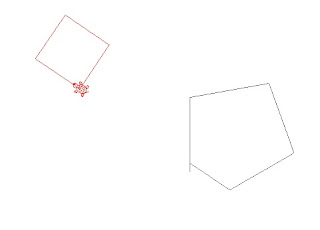
One focus was learning about a simple computer programming language called LOGO that was developed at MIT as an educational aid for children. In Logo the cursor is a “turtle” who moves across the screen creating graphics based on the commands given by the children. We learned some basic Logo commands, and students then worked on writing out programs (a series of commands) which they could type into the computer to see the results. This project has generated a good deal of excitement in our group. Initially the students worked in partnerships, helping each other as they learned. Then each student had an opportunity to work on a laptop solo. Logo helps students develop their spatial/geometric sense as well as providing good problem solving experience, as they try to figure out how to make the turtle create the drawings they want.

One focus was learning about a simple computer programming language called LOGO that was developed at MIT as an educational aid for children. In Logo the cursor is a “turtle” who moves across the screen creating graphics based on the commands given by the children. We learned some basic Logo commands, and students then worked on writing out programs (a series of commands) which they could type into the computer to see the results. This project has generated a good deal of excitement in our group. Initially the students worked in partnerships, helping each other as they learned. Then each student had an opportunity to work on a laptop solo. Logo helps students develop their spatial/geometric sense as well as providing good problem solving experience, as they try to figure out how to make the turtle create the drawings they want.

Dreidel Probability
In December we did a probability study with dreidels. We talked about the tops used for the traditional Hanukkah game of dreidel and what we would expect with a fair dreidel. Students said that each of the four sides should have an equal chance of coming up. A few talked about how they want gimel to come up the most. Then we speculated about why one side might come up more than the others. Students thought about how they were made, about whether the letters were painted on or were on the side in relief, and about how the dreidel behaves when it is spun. I shared that to get an accurate picture we needed to have a lot of spins. In our study we compared plastic and wooden dreidels to see if one kind was more consistently fair than the other. Students spun the dreidels in class and at home for homework. Then each student recorded the results in a spreadsheet. Here are our results:


Wednesday, November 3, 2010
Correcting Math Misconceptions

I have been reading the section on two digit addition and subtraction. The writers share this from research:
“When children focus on following the steps taught traditionally, they usually pay no attention to the quantities and don’t even consider whether or not their answers make sense.” (Richardson, 1999,100)
and they add that“an understanding of place value is critical to computing efficiently and effectively.”
It gives me good feedback to see that a number of activities they suggest to counter the misconceptions are ones that are part of our curriculum. We include activities such as noticing patterns on a 100s chart, representing two-digit numbers using different sets of tens and ones with cubes and blocks, and having students verbalize and share the strategies they use for two-digit addition. I also have found some new activities to add to our explorations. In one, Make 100, students roll two dice and get that number of Unifix cubes. They place them on a mat with a place for ones and tens. When they get enough cubes, they can snap them together to make a ten and move that group of ten to the other column. They keep going, recording each turn, until they reach 12 turns or 100. For students who need additional challenge, they can work to mentally compute how many more they need to reach 100 at each turn. This game is similar to a game I usually have the students play with base 10 blocks, in which students trade in 10 cubes for a 10 stick. I like the version with Unifix cubes as a lead-in to the other game, because the students are constructing the tens themselves. Later we will play a game that takes away cubes, so that they can deconstruct tens as they subtract.
Monday, April 12, 2010
My Math Explorations
Today as we settled back into our routines after Spring Break, I took a little time to share with my math group about some math related explorations I did over break. For the first part of the break I took time off entirely: time to play with my granddaughters, time to watch the Final Four, time to hike and look for wildflowers. But the last few days of break I began to look through some math materials and think more about math and the rest of the year.
Math Solutions has a new book that looks interesting, Faster Isn't Smarter. Several chapters of the book are available online (http://www.mathsolutions.com/index.cfm?page=wp18&contentid=994&crid=294&mcrid=107) and that gave me a chance to read through them and mull them over. I shared with my students the name of the book and the idea that sometimes thinking deeper and taking time to process yields a broader understanding than coming up with a quick answer. Being fast in math doesn't necessarily mean you are smarter than others who take more time. I told my students that what is important is to learn what strategies work for you.
I also shared an activity from the latest edition of Teaching Children Mathematics, published by the National Council of Teachers of Mathematics. The activity I read about was for kindergarten students so I upgraded it some for my students. It involved tossing some 2 sided counters (red and white) and recording how many of each color turned up. Students were asked how they figured the totals (recognized the number, counted, knew the number fact, grouped the counters in their mind, etc.) They got practice in explaining their math strategies to the group or to a partner. Some students took on the additional challenge of explaining what they heard another student share as a strategy. We will do this activity again soon, working with a different total number of counters.
Math Solutions has a new book that looks interesting, Faster Isn't Smarter. Several chapters of the book are available online (http://www.mathsolutions.com/index.cfm?page=wp18&contentid=994&crid=294&mcrid=107) and that gave me a chance to read through them and mull them over. I shared with my students the name of the book and the idea that sometimes thinking deeper and taking time to process yields a broader understanding than coming up with a quick answer. Being fast in math doesn't necessarily mean you are smarter than others who take more time. I told my students that what is important is to learn what strategies work for you.
I also shared an activity from the latest edition of Teaching Children Mathematics, published by the National Council of Teachers of Mathematics. The activity I read about was for kindergarten students so I upgraded it some for my students. It involved tossing some 2 sided counters (red and white) and recording how many of each color turned up. Students were asked how they figured the totals (recognized the number, counted, knew the number fact, grouped the counters in their mind, etc.) They got practice in explaining their math strategies to the group or to a partner. Some students took on the additional challenge of explaining what they heard another student share as a strategy. We will do this activity again soon, working with a different total number of counters.
Saturday, February 13, 2010
How do we measure liquids?

Friday I brought a container of water to math group and asked the students how we could measure a liquid. One student suggested that we could measure the temperature with a thermometer (calling up a S'math lesson we did earlier this school year.) Another said we could find out how much it weighed. Then someone pointed out it would be hard to find out because if we weighed it on a scale, we would also be weighing the container it was in. We discussed how to get around that problem. Then someone suggested measuring liquid with a measuring cup. I brought out some measuring cups and liters, and we looked at those.
Then I brought out a tall, thin glass and a short, fat glass. I asked which they thought would hold the most water. One student said he thought they would hold the same amount. The others were divided between thinking the tall glass and the wide glass would hold the most. When we carried out the experiment, it turned out they each held exactly 1 cup.
As we moved on the Math Choice time, some students chose to experiment some more with the water and the different containers.
Tuesday, February 2, 2010
Measurement Explorations

We have been working on finding items in the classroom that are about as long as the white and orange cuisinaire rods. Once students found 5 items for each, we learned that the white rod is one centimeter long and the orange rod is 10 centimeters or 1 decimeter long. Another day we did the same activity using inch cubes. After these explorations, students had to measure some things at home with rulers or yardsticks for homework. Where possible they were to measure in English and metric units. As we shared the results of their measurements last Friday, we developed a clear sense of the relationship between an inch and a centimeter.
This activity was drawn from Marilyn Burn's work.
Tuesday, November 3, 2009
Smathing Pumpkins


In Sky we do math in different ways at different times of day. It doesn't just happen in Math Group. It is a big part of what we call "S'math," science and math together. We draw a lot of our activities from AIMS Education Foundation (http://www.aimsedu.org/). AIMS stands for Activities Integrating Math & Science. We also draw on other sources, and we like to draw in any themes we are pursuing as well as student interests.
Last year we did an AIMS activity about apples. This year I thought I'd put a twist on it and do it with mini-pumpkins. After dividing into groups of 3 (at least one boy, at least one girl, at least one old-timer, at least one new-timer) we worked with the mini-pumpkins. First we looked at them with our "scientist's eye," observing closely and noticing details. Each student drew the group's pumpkin, using observation skills. Then they came up with estimates for how many teddy bear counters they thought it would take to balance the pumpkin in a scale. Once estimates were done, each group worked together to weigh the pumpkin and record how many teddy bear counters it took.
The last part of the activity was to think about the distance around the pumpkin, the circumference. Students estimated how many teddy bear counters would make a train as long as a string that went around the pumpkin in its fattest part. They also estimated how many unifix cubes would make a train that long. Then they worked together to cut a string that went around the pumpkin and to do the actual measurements and recording.
Tuesday, October 13, 2009
Math Talk

I often give my math homework in a "problem of the day" format. I draw a lot of the problems from Think About It! Primary Math Problems of the Day by Marcy Cook, published by Creative Publications. There are different kinds of problems. Some involve estimation. Last week students were asked to estimate how many of our math binders it would take to make a stack 1 meter high. On Fridays we review the homework as a group, sharing answers and strategies. It's a great time for the "math talk" that both helps individual students learn to put math thinking into words and gives students a chance to hear other students' ideas to broaden their perspectives.
The math binder estimation problem sparked a lot of discussion. First I asked, as I often do, what information can help us make a smart guess? Answers included how long a meter is and how thick a math binder is. Then we pulled out a meter stick and tackled the problem of how to find the actual amount. As we stacked the binders we could see that even if we got all the other math groups' binders, we wouldn't have enough binders to get to a meter. Several students showed us their ideas of what we could do. One pointed out that five binders reached the 10 centimeter mark. He explained that there are 100 centimeters in a meter, so 10 groups of 5 would be 50. Another pointed out that 10 binders were 17 cm. and she said we could add by 17's until we got to 100 (though we got to 102 rather than 100 even.) We used both ways and discovered we came up with 2 different answers. What was going on? Several students then recognized that the binders were thicker on one side, so how we stacked them effected the outcome. It was a lively math investigation.
The other problem from this week that sparked a lot of interest was the one that asked how many legs were on 4 octopi. Students were asked to write an equation to represent the problem and answer. Several students volunteered to write their equations on the board, and we talked about the different equations. Two people added up 4 eights, but one got 31 and the other got 32, so we all checked the math. Several had used multiplication equations, and we agreed that 4 X 8= 32 and 8 X 4= 32 were both correct and could both represent the problem. One person had 16 + 16= 32 and a classmate suggested an additional equation of 8 + 8= 16 would make the connection between that equation and the problem clearer.
Tuesday, September 29, 2009
Visualizing Numbers

One thing math teachers learn is that it is important for children to be able to represent and visualize numbers in different ways. Last spring when I went to the conference for the National Council of Teachers of Mathematics, I heard a lot about visualizing numbers in a variety of sessions, including one on Singapore math and ones presented by Marilyn Burns and others from Math Solutions. (For more about my thoughts on the NCTM conference see http://skyclassjoanmath.blogspot.com/2009/04/nctm-meeting-in-washington-dc.html and http://skyclassjoanmath.blogspot.com/2009/04/marilyn-burns-and-more.html )
Lisa Rogers from Math Solutions presented a session I enjoyed on developing number sense. One model she shared for visualizing numbers is using ten-frames. It's a model that helps students regroup numbers within our base 10 number system. I have done several mini-lessons with my math group using the overhead projector to introduce them to ten-frames. I have drawn ideas from Susan Scharton's book, Teaching Number Sense- Grade 2. The children have responded with enthusiasm and have been becoming more articulate in describing how they see and manipulate numbers with ten-frames.
Monday, March 9, 2009
World Math Day


Wednesday, March 4, was World Math Day. Although we did not participate in any of the online competitions associated with Math Day, we found a fun way to celebrate the day. Lower School head teacher, Lisa, came to Sky Class and taught the students a math game based on some traditional Native American math games. After playing the game with a partner, students got to take the materials home so that they could play the game some more.
Friday, February 20, 2009
100 Equations

On our 100th day we began a chart to see if the class could come up with 100 equations that equal 100. There was a lot of initial effort and now it has ebbed somewhat. But slowly we are creeping up to 100. As of now we have 98, so just 2 more to go! We've got an interesting combination of addition, subtraction, multiplication, and division equations and some combos. It has been fun watching the kids work out equations. Some just think of one and then look to see if it's on the chart already. Others will take an equation already on the chart and vary it a little.
Tuesday, February 10, 2009
100th Day!


Monday was our 100th day of school. We had a fun morning doing a variety of activities centered on the number 100. The kids always love making 100 day Trail Mix. They get to choose 10 different items (from a selection of dried fruit, bite-sized cereal and crackers, seeds, & chocolate chips) and get 10 of each item. They line their choices up on a hundreds chart then slip it into a bag to munch on. Another favorite is the 100 pig hunt. While one teacher reads Pigs in Hiding, the others hide 100 numbered paper pigs around the main part of the classroom. Excitement ensues as the children try to find all the pigs. As they are found, their numbers are turned around on a hundreds pocket chart. We are now down to about 8 unfound pigs. Some years the last ones don't turn up until end of year cleanup!
Every student had a collection of 100 items to put on display. They all arranged their collections along with a written description. River Class came to visit, and we had a chance to view our classmates collections. It was a wide variety that included collections of shells, rocks, Hershey's kisses, drawings of flowers, pictures created in Photoshop, legos, coins, etc. Students did 100 foot relays, played games with a hundreds chart, colored 100 hearts and 100 stars, worked to write 100 words, and strung necklaces of 100 beads. We are still working on filling a chart with 100 equations that equal 100.
Pictures: Upper left: making 100 item trail mix Upper right: game with the 100 chart
Lower left: a building for 100 frog counters
Wednesday, February 4, 2009
"But it doesn't come out even!"

This is another journal problem that can puzzle the kids because it doesn't come out even. Today I asked my students to consider this problem:
You invite 10 friends over for a party. You want to serve juice. You want enough for each person to have 1 cup. The extra special juice you want to buy (raspberry razzle-dazzle kiwi!) only comes in quarts. (At this point I asked the students to remember how many cups are in a quart and one of the students supplied 4.) How many quarts do you need to buy? Prove your answer.
Quite a few asked for help. For each I asked leading questions until they came up with an answer and a way to express their understanding of it. Some included themselves in the planning and some did not. One kept trying to adjust the number of people so that every cup was accounted for: "well my parents could come, or maybe I'll have one go out and one stay." That extra cup tends to bother them a lot and I don't think it is in the name of "waste not want not." For them division should be neat and tidy. We'll share our solutions soon. I hope problems like this help them reach some peace with the idea that math can be messy!
Sunday, January 25, 2009
S'marvelous S'math
We include activities in our curriculum that we call S'math because they use science and math together. One source for ideas is AIMS Education Foundation (http://www.aimsedu.org/). AIMS stands for Activities Integrating Math & Science. We also draw on other sources to "cook" up our plans, drawing in any themes we are pursuing as well as student interests.
This year our whole Lower School theme is "Way to Grow." Some of our early S'math activities focused on plants, using our Sky Class garden at times. We are also studying the human body and learning about its systems and parts. One activity focused on the skeleton as we explored bones and joints. More recently we did an activity (drawn from Marilyn Burns) in which students were asked to estimate how many times a strings equal to their heights would go around their heads at the forehead. We then went on to explore other body ratios (How does your height relate to your wingspan? How does your height relate to the length of your leg?)
This year our whole Lower School theme is "Way to Grow." Some of our early S'math activities focused on plants, using our Sky Class garden at times. We are also studying the human body and learning about its systems and parts. One activity focused on the skeleton as we explored bones and joints. More recently we did an activity (drawn from Marilyn Burns) in which students were asked to estimate how many times a strings equal to their heights would go around their heads at the forehead. We then went on to explore other body ratios (How does your height relate to your wingspan? How does your height relate to the length of your leg?)
Sunday, December 28, 2008
Rachel Counts (in more ways than one!)

I am enjoying Winter Break, a chance to catch my breath in the midst of a busy school year. We are in the Smokies with family for the holidays. This has given me lots of good time with granddaughter Rachel, who reports her age as three and three-quarters. Like her father and uncle when they were this age, she delights in patterns and numbers. We count pennies as we play dreidel. We count blocks and toys and the cookies we cut out of the sugar cookie dough. We count cards as we play Concentration (Memory), where she shows a strong visual memory. Her number sense seems to strengthen every day. We were building with her baby sister's blocks one day. We had established the previous day there were ten of the soft rubbery blocks in all. We were trying to recreate a structure we had built the day before, but could not as some were missing. She carefully counted out eight blocks. I asked her how many were missing. She thought for a moment. "Two! " she announced. Later we found one of the missing blocks and added a bear to the structure.
Monday, December 8, 2008
Who Knows How the Time Goes?
Telling Time is a usual topic for kids this age. Over the years, as digital clocks have become more common and analog clocks have become rarer, I've had to give thought to how much emphasis to put on telling time with an analog clock. While a digital clock is easier to "read," an analog clock, to my mind, gives a clearer sense of the passage of time and fractions of an hour. So while some of my students report that they do not have even one analog clock at home, I continue to spend some time on working with analog clocks. We use mini instructional clocks so that each student has one and can move the hands as we try to both set certain times and read times from the clock. I think one reason learning to read an analog clock is challenging for some students is that the numbers mean different things depending on whether you are looking at the hour hand or the minute hand. For concrete thinking seven and eight year olds, this can take some getting used to.
Subscribe to:
Posts (Atom)

